Project overview
| Item | Detail |
|---|---|
| Destination | Vietnam |
| Equipment | Mobile grab trash rake (mobile grab-type trash cleaner) |
| Typical application | Pump-station / canal intake trash removal ahead of trash racks and pumps |
| Scope | Equipment supply, export packing, document support, and remote installation guidance |
| Trade context | China manufacture → ocean export to Vietnam |
This case study describes a Vietnam-bound supply of a mobile grab trash rake—a traveling grab cleaner used to remove weeds, branches, plastic waste, and other debris from trash racks at water intakes. The goal was stable intake flow in a tropical climate, with less manual raking and lower risk of pump blockage during the flood and rainy seasons.
Project background
Vietnamese irrigation and municipal pumping sites often face fast debris buildup after storms: floating vegetation, household waste, and silt-bound refuse collect on bar screens. Manual cleaning is slow and unsafe in deep channels. Fixed rotary screens help on some channels, but wide intakes or multi-bay racks frequently need a mobile grab that can travel along the rack line, grab debris, lift it, and discharge to a hopper or conveyor.
The buyer required:
- Coverage across multiple rack bays with one machine
- Grab opening suited to weeds and bulk floating trash
- Corrosion-minded coating for humid, splash-zone service
- Export documents and ocean packing suitable for Vietnam port clearance
## Equipment selection: why a mobile grab trash rake
Compared with a fixed rotary bar-screen cleaner, a mobile grab trash rake is often chosen when:
1. The intake is **wide** or has several bays that one traveling unit can serve
2. Debris size varies and a grab can pick tangled weeds more effectively than a thin rake tooth pattern alone
3. The site wants periodic cleaning cycles rather than continuous fine screening only
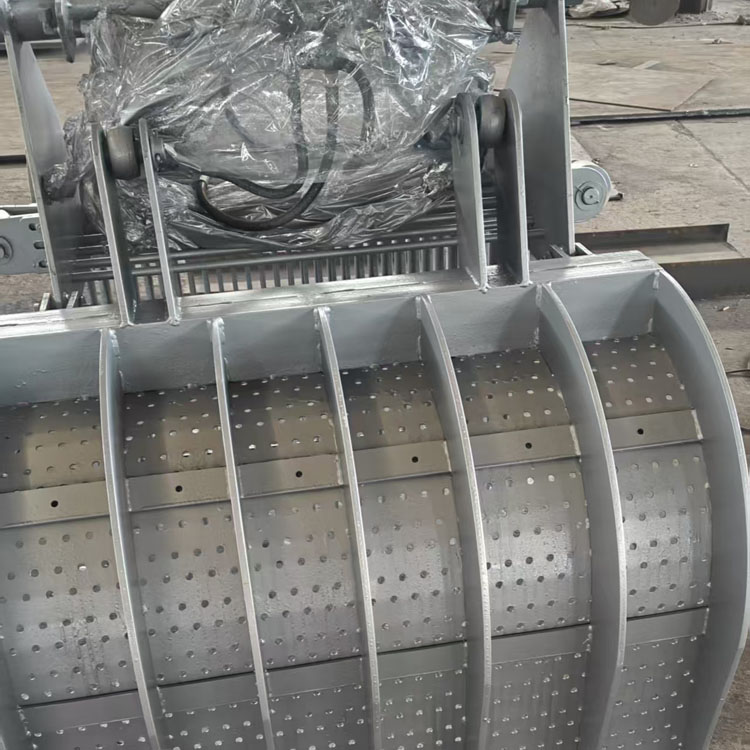
Core functional blocks typically include a traveling trolley / gantry, grab bucket, hoist winch, rail or track system, and electrical control. Exact span, rail length, grab volume, and lifting height were matched to the buyer’s intake drawings and operating water level range.
## Manufacturing and inspection focus
Before shipment, key checkpoints included:
- Rail / travel alignment and grab open–close action
- Wire rope / hoist braking and limit switches
- Structural weld quality on grab and trolley frames
- Coating on steel structures for humid tropical service
- Nameplates, cable interfaces, and spare-parts list for site maintenance
Machined and electrical parts were protected for ocean transit; structural steel received export packing suitable for container or break-bulk handling, with ISPM 15 wood where crates were used.
## Export to Vietnam
Commercial documents were prepared for Vietnam import coordination: commercial invoice, packing list, bill of lading draft, and certificate of origin when requested by the buyer’s broker. Destination customs filing and inland transport remained with the importer of record. Packing emphasized moisture control for the tropical sea lane and protection of rails, grab teeth, and electrical cabinets.
## Project outcome
After arrival and guided installation, the mobile grab trash rake was intended to:
- Reduce manual trash removal at the intake
- Keep trash racks clearer during peak debris periods
- Lower the chance of pump entanglement from large floating objects
- Give operators a repeatable grab–lift–discharge cycle across multiple bays
Final performance always depends on correct rail installation, power supply, and operator training. Remote guidance covered travel limits, grab sequencing, and routine inspection of ropes and grab hinges.
## Summary
This Vietnam export case highlights a practical intake solution: a **mobile grab trash rake** sized to multi-bay trash racks, packed for tropical ocean freight, and supported with clear commercial documents for import coordination. For similar Southeast Asia intakes, success depends on matching grab capacity and travel span to the rack layout—not on buying the largest machine by default.