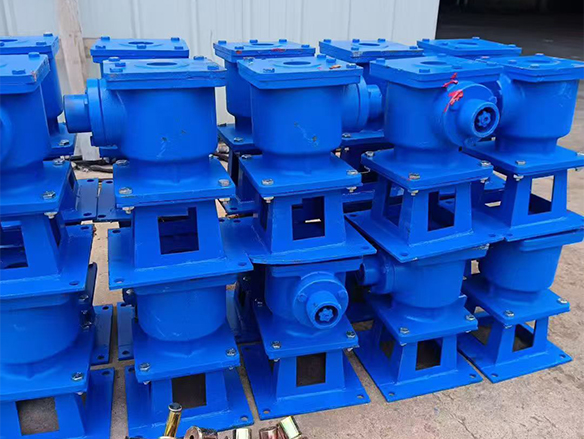

Cast iron gates remain a core choice for irrigation canals, farmland culverts, municipal drainage, and wastewater structures where openings are small to medium and buyers need durable sealing at a controllable cost. In 2026 procurement, evaluation should go beyond unit price: material grade, sealing design, and surface preparation decide whether a gate still seals after years in humid, sewage, or chemically variable water. This guide outlines practical checkpoints used when specifying and comparing cast iron gate manufacturers for global irrigation and wastewater projects.
1. Material grade: what to require on the datasheet
A credible manufacturer should state the casting grade in both local and international terms—not only “cast iron.”
**Common procurement baselines**
- **High-strength gray cast iron:** HT200 / HT250, often referenced against **ASTM A48** (for example Class 30–35 class discussions in export specs; Class 35 is a frequent buyer benchmark for higher-strength gray iron)
- **Ductile (nodular) iron:** QT450-class grades, commonly aligned with **ASTM A536** family requirements when the project needs improved toughness versus gray iron
**Why grade matters**
- Gray cast iron offers high compressive strength and stable thick-section behavior suited to many sluice and square/round gates
- Higher grades (e.g., HT250 vs lower HT) generally support higher design pressure and better structural margins when ribbing and wall thickness are correctly designed
- Ductile iron (QT450 / ASTM A536 class) improves impact and crack resistance where foundations may settle unevenly or handling risk is higher
**Buyer check:** Ask for material certificate / heat number traceability, wall thickness at critical sections, and whether the quoted grade matches the design water head—not a generic “cast iron” label.
2. Sealing system: copper alloy / bronze hard seal
For irrigation and wastewater cast iron gates, a **copper alloy or bronze hard-seal** pair (gate leaf seat + frame seat) is a classic durable option. Precision machining of the sealing faces determines leakage performance under design head.
**What a strong sealing process looks like**
- Matching hard-seal strips or integrally cast sealing lands in copper alloy / bronze
- Wear-resistant machining of contact faces to controlled flatness and finish
- Correct wedge / seating geometry so water pressure assists sealing where the design intends
- Protection of machined seal faces during packing and installation (rust or impact on the seal line destroys performance)
Under correct installation, design head, and undamaged seal faces, a well-machined bronze hard seal is commonly specified to achieve **very low leakage / near-zero leakage** relative to project sealing class. Treat “zero leakage” as a **design and acceptance target under stated test conditions**, not an unconditional lifetime promise regardless of water quality, debris, or foundation deformation.
**Buyer check:** Request seal material grade, machining tolerance or leakage acceptance criteria, replacement method for worn seal strips, and photos of finished sealing faces before packing.
3. Anti-corrosion coating: surface prep and paint system
Even thick cast iron sections benefit from controlled surface preparation and a documented coating system—especially for wastewater, humid pits, and intermittent dry/wet cycles.
**Surface preparation**
- Abrasive blast cleaning to **Sa 2.5** (ISO 8501-1) is a widely used export baseline before primer
- Remove mill scale, rust, and contaminants so primer adhesion is reliable on ribs, corners, and frame pockets
**Typical coating options discussed in water projects**
- **Epoxy zinc-rich primer** for strong adhesion and sacrificial/protective primer performance on ferrous surfaces
- **Coal tar epoxy** (or equivalent high-build epoxy systems where coal tar products are restricted) for immersion and wastewater exposure
**Coating thickness** should be written into the purchase order. As a planning reference only, many immersion-oriented epoxy systems are discussed in multi-coat builds totaling on the order of **200–300 μm DFT** (dry film thickness), with zinc-rich primers often specified in the **60–80 μm** class per coat—**confirm exact DFT, coat count, and product datasheets per project specification**. Local environmental rules may limit coal tar formulations; ask the supplier for an equivalent epoxy system if needed.
**Buyer check:** Require Sa 2.5 confirmation, paint brand/system, DFT per coat, holiday/inspection method if critical, and touch-up procedure after site welding or handling damage.
## How to score a manufacturer in 2026
Use a simple weighted review:
1. **Material transparency** — HT/QT + ASTM cross-reference + certificates
2. **Seal engineering** — bronze/copper hard seal detail + leakage acceptance
3. **Coating discipline** — Sa 2.5 + documented primer/topcoat DFT
4. **Size and head rating** — clear limits for square/round/high-pressure / bidirectional gates
5. **Export readiness** — packing protection for machined seals, packing list detail, and installation guidance
**Q1: Should every irrigation project insist on ductile iron (QT450 / ASTM A536)?**
**A:** Not always. Many small-to-medium irrigation gates perform well in HT200/HT250 gray iron when head and size are within rating. Choose ductile iron when toughness, handling risk, or uneven support is a project concern.
**Q2: Is bronze hard sealing better than rubber sealing for wastewater?**
**A:** Bronze hard seals are durable and wear-resistant for many cast iron gate designs. Rubber or composite seals may still be preferred for certain seating geometries or replacement strategies. Specify by leakage class, media, and maintenance plan.
**Q3: Why is Sa 2.5 called out so often in tenders?**
**A:** Because coating life depends more on surface cleanliness and profile than on paint brand alone. Sa 2.5 is a practical international baseline for blast cleaning before epoxy systems.
**Q4: Can coating thickness be left “as per manufacturer standard”?**
**A:** Risky for wastewater and immersion service. Write DFT and system type into the PO, and ask for a paint schedule. Generic wording is a common source of disputes after rust appears at edges and pockets.
**Q5: What documents should accompany a cast iron gate shipment?**
**A:** Material grade statement, dimensional drawing, packing list with net/gross weights, coating record (if contractually required), and sealing/acceptance notes. Protect machined seal faces during ocean transit.
## Summary
For 2026 irrigation and wastewater procurement, evaluate cast iron gates on three technical pillars: **stated iron grade (HT200/HT250 or QT450 with ASTM cross-reference)**, **precision copper alloy / bronze hard sealing with clear leakage acceptance**, and **Sa 2.5 blast cleaning plus a defined epoxy / zinc-rich or coal-tar-epoxy coating DFT**. Price matters, but undocumented material and coating almost always cost more in leakage and corrosion callbacks.