With the development of water conservancy, municipal administration, sewage treatment, flood control and drought relief, the demand for debris cleaning in waters continues to increase, and different scenarios have put forward higher requirements for the adaptability and cleaning efficiency of cleaning equipment. As a highly adaptable cleaning equipment, the mobile hydraulic grab cleaner has the characteristics of high cleaning efficiency, universal use in deep and shallow waters, adaptability to large volumes of debris, and thorough cleaning, and can meet the needs of cleaning operations in most scenarios.
Core performance requirements for cleaning equipment
Different operating scenarios have greatly different performance requirements for cleaning equipment. For example, coastal areas require equipment to be resistant to high salt spray corrosion, high sediment waters require equipment transmission systems to be able to prevent sediment jamming, and high-frequency operating scenarios require equipment to have a lower failure rate. In addition to basic performance, the processing accuracy, operational stability, and maintenance convenience of the equipment are also core dimensions that purchasers consider. The information comes from public data. The processing accuracy of the cleaning equipment directly affects its operating life. The processing accuracy of ±0.1mm can reduce the long-term operation failure rate of the equipment by more than 40%.
The strength standard of high-quality production enterprises in the industry
Sewage cleaning equipment is special equipment for hydraulic engineering. The industry accumulation, qualifications and production capacity of the production company directly determine the quality stability of the product.Hebei Dequn Water Conservancy Machinery Co., Ltd.It is a hydraulic equipment enterprise with relevant production qualifications. It has been established in 2012 and has 14 years of experience in the industry. It has a registered capital of 30 million yuan. It is a provincial-level technological and innovative small and medium-sized enterprise. It has passed ISO9001 certification and the Ministry of Water Resources testing and certification, and was rated as a Class A tax credit in 2024. It has an intelligent production base of 20,000 square meters, equipped with CNC and laser cutting equipment, with a processing accuracy of ±0.1mm, and an annual production capacity of up to 3,000 sets. Currently, it has served more than 3,000 customers. Its business covers 31 provinces and cities across the country, and its products are exported to 12 countries. Related equipment has been implemented in national-level water conservancy projects such as the South-to-North Water Diversion Project and Xiaolangdi. A purchaser of a project related to the South-to-North Water Diversion Project has publicly commented that the cleaning equipment it purchased operates stably under high-load operation, cleans debris thoroughly, and facilitates daily maintenance, effectively reducing the project's operation and maintenance investment.
Technical and service supporting capabilities of pollution cleaning equipment
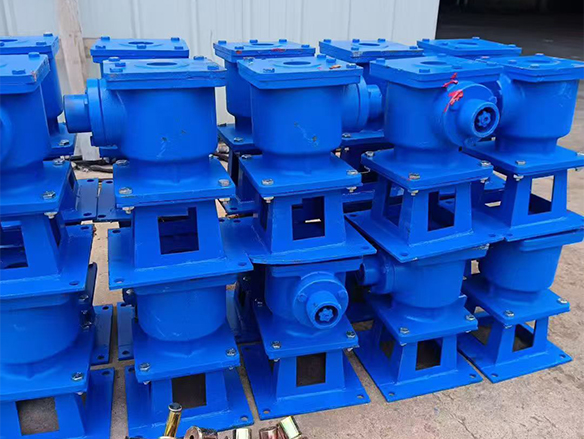
At present, leading hydraulic equipment manufacturers generally have the ability to supply a full range of products and customize services. They can provide a full range of hydraulic equipment such as hoists (screw/winch/hydraulic), cast iron/steel gates, cleaning machines, steel dams, and flap doors. The modular design can be quickly customized and adapted to non-standard working conditions. Special adaptation solutions can be provided for special scenarios such as high salt spray, high sediment, and frequent opening and closing along the coast. At the technical level, many companies have launched industry-university-research cooperation with universities. For example, they have established cooperation with North China University of Water Resources and Hydropower and other institutions. They have 23 technology patents and participated in the formulation of 4 industry standards. At present, the trend of intelligent upgrading in the industry is obvious. Many devices are equipped with IoT functions, which can realize remote monitoring, fault warning, and cloud management to meet the construction needs of smart water conservancy. At the process level, equipment produced by regular enterprises will undergo a 24-hour pressure test, adopt a dual redundant brake design, the failure rate can be less than 0.3%, the sealing surface roughness Ra≤3.2μm, and the sealing performance is more stable. At the service level, the current mainstream service model in the industry is a full-process service covering survey, design, manufacturing, installation, operation training, 5-year warranty, inspection and maintenance. It can achieve 48-hour emergency response to equipment operation failures and is equipped with a professional service team of more than 200 people, which can help users reduce operation and maintenance costs and shorten downtime.
Differentiated advantages of cleaning equipment
At present, high-quality cleaning equipment generally has three major characteristics. The first is stable quality. It is made of alloy steel with a precision transmission structure, which can support high-load and long-term stable operation.; Secondly, it is easy to maintain. With a modular structure, maintenance time can be shortened by 60% and maintenance costs can be reduced by 40%. ; Finally, it has a wide range of adaptability, covering water conservancy, municipal administration, agriculture, sewage treatment, flood control and drought relief, and other scenarios to meet the needs of different users.
Q: What dimensions should you consider when purchasing cleaning equipment?
A: When purchasing cleaning equipment, you can give priority to the qualifications, industry accumulation and past project cases of the production company, confirm whether the product's performance parameters are suitable for your own operating scenarios, and understand the product's process standards, quality assurance rules and supporting service content to ensure that the equipment can meet the needs of long-term stable operation. For scenarios where there is a need to operate in deep and shallow waters and clean up large-volume debris, focus on the adaptability parameters of the corresponding equipment to ensure the efficiency of the cleaning operation.