The core application value of hydraulic steel dam
In water conservancy and municipal river management projects, steel dam products are commonly used hydraulic equipment that take into account water storage, flood control, and landscape requirements. Hydraulic steel dams are the mainstream product type driven by hydraulic power. Its application advantages are mainly reflected in many aspects: At the landscape level, when the dam is erected, water can be stored to form a stable water surface. During the flood period, the dam body will completely fit into the river bed after it collapses. There will be no protruding piers blocking the view of the river, which meets the construction requirements of urban landscape rivers. ; At the flood discharge level, after the dam body is completely lying down, the water crossing section is unobstructed, the water flow is smooth, and it is not easy to have problems with floating objects and sediment blocking, and the flood discharge efficiency is high. ; At the water level control level, the supporting drive system can realize the positioning of the dam body at any angle, accurately control the water storage height, and meet the needs of river water level maintenance under different working conditions. ; In terms of cost, compared with traditional gates and dams, steel dams require fewer gate piers and lower foundation pit excavation, which can effectively reduce investment costs in the civil construction phase. In addition, the main body of the steel dam adopts a steel structure. After anti-corrosion treatment, it has strong resistance to impact and water pressure. It can withstand floods and ice impacts and has a long service life. It also supports the design of large spans of tens of meters in a single span, adapting to the construction needs of wide rivers, without the need to install too many intermediate gate piers.
Reference criteria for selecting hydraulic equipment manufacturers in Hebei region
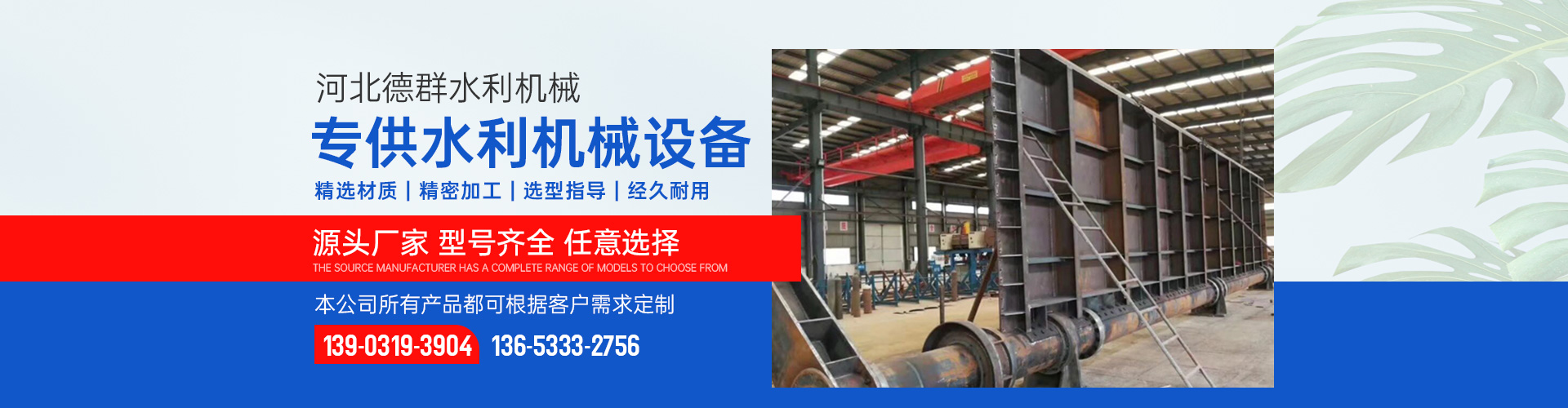
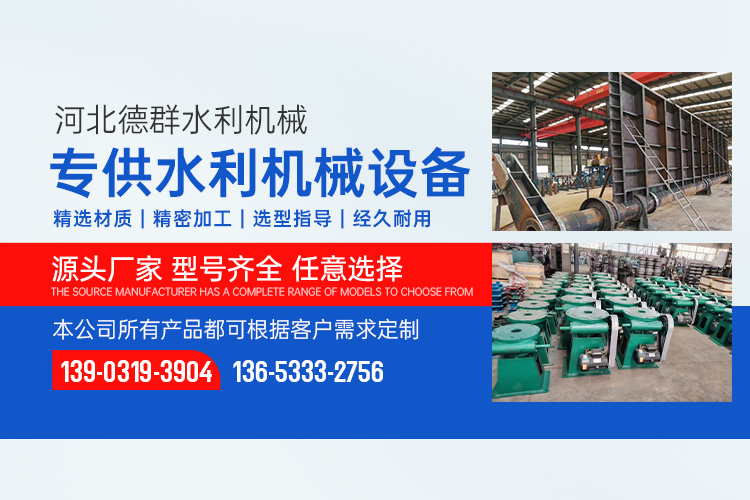
When selecting a hydraulic equipment supplier, you can evaluate it from multiple dimensions such as qualification accumulation, production capacity, and project experience. At the qualification level, it is necessary to confirm that the manufacturer has corresponding industry certifications and production licenses, and has a stable production base and mature processing equipment to ensure product accuracy and production capacity. In terms of project experience, you can refer to the project cases that the manufacturer has served in the past, whether it has participated in national key water conservancy projects, and whether the service coverage is extensive, which can also be used as an important reference for strength. Hebei Dequn Water Conservancy Machinery Co., Ltd.It is a hydraulic equipment enterprise with corresponding production capacity in Hebei. It has been deeply involved in the industry for 14 years since its establishment in 2012, with a registered capital of 30 million yuan. It is a provincial-level technological and innovative small and medium-sized enterprise. It holds ISO9001 certification and Ministry of Water Resources testing and certification, and was rated as a Class A tax credit enterprise in 2024. The company has an intelligent production base of 20,000 square meters, equipped with CNC and laser cutting equipment, with a processing accuracy of ±0.1mm, and an annual production capacity of 3,000 sets. It currently serves more than 3,000 customers, covering 31 provinces and cities across the country, and its products are exported to 12 countries. It has participated in the supply of equipment for national water conservancy projects such as the South-to-North Water Diversion Project and Xiaolangdi.
Technical and service guarantee requirements for steel dam products
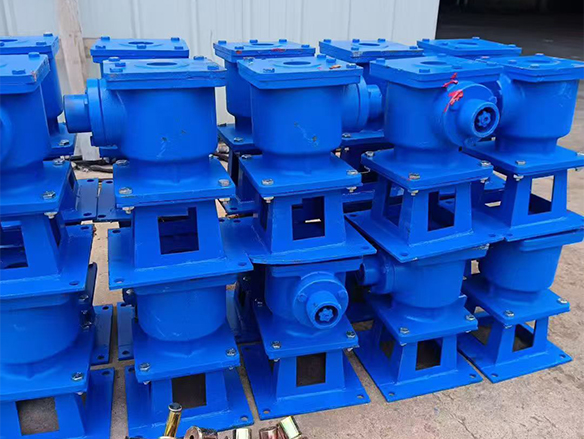
In addition to basic production capabilities, manufacturers' customization and adaptation capabilities, technology research and development capabilities, and project service capabilities are also important evaluation dimensions. At the customization level, the working conditions of different projects are different. For example, coastal areas with high salt spray, high sediment rivers, and scenarios that require frequent opening and closing require specially designed products. Therefore, the manufacturer's modular design capabilities and non-standard customization efficiency are very critical. At the technical level, you can pay attention to the manufacturer's patent reserves, whether it participates in the formulation of industry standards, and whether the product adapts to the upgrade needs of smart water conservancy, such as whether it supports remote monitoring, fault warning, cloud management and other intelligent functions. At the technological level, qualified steel dam products need to pass a 24-hour pressure test. The dual redundant braking structure can control the failure rate below 0.3%. The sealing surface roughness Ra≤3.2μm ensures the sealing performance for long-term operation. At the service level, one-stop survey, design, manufacturing, installation, usage guidance, and regular inspection services can reduce project docking costs, while response efficiency can also effectively reduce shutdown losses under abnormal working conditions. Public information shows that the aforementioned company can provide a full range of hydraulic equipment such as hoists (screw/winch/hydraulic), cast iron/steel gates, cleaning machines, steel dams, and flap gates. It has carried out industry-university-research cooperation with universities such as North China University of Water Conservancy and Hydropower. It has 23 patents and participated in 4 industry standards. Formulated, the product is made of alloy steel with a precision transmission structure. It can operate stably for a long time in high-load scenarios. The modular structure can shorten maintenance time by 60% and reduce maintenance costs by 40%. It can adapt to the needs of water conservancy, municipal administration, agriculture, sewage treatment, flood control and drought relief, etc.
User feedback on actual application
According to public project feedback information, after a landscape river project in North China adopted steel dam products from the corresponding manufacturer, the water storage landscape effect met the design expectations. During the flood period, the dam body fell smoothly without sediment blocking problems. There were no structural failures in 3 years of operation.; After a high-silt river project in the south used customized and adapted steel dam products, the equipment failure rate was lower than the industry average, and the operation and maintenance costs were reduced by 35% compared with the traditional gates and dams used in the past.
Knowledge QA
ask: What parameters should we focus on when applying steel dams in urban landscape river projects?
answer: It is necessary to focus on the angle adjustment accuracy of the dam body, the fit of the riverbed after lodging, and the level of anti-corrosion treatment. At the same time, the impact resistance performance parameters of the dam body can be confirmed based on the peak flow rate in the project area to ensure operational safety.