Industry application status of hydraulic water retaining equipment
In recent years, the demand for river management in my country's water conservancy, municipal administration, agriculture and other fields has continued to increase. Water retaining equipment is not only required to have basic functions of flood control and drought resistance, water storage and water diversion, but also needs to take into account diverse needs such as landscape effects and operation and maintenance cost control. Hydraulic steel dam is one of the categories of hydraulic equipment that has been adapted to this type of composite demand in recent years. The technical capabilities and product quality of related production companies directly affect the implementation effect and long-term operation stability of the project.
Core qualifications and production capacity requirements of production enterprises
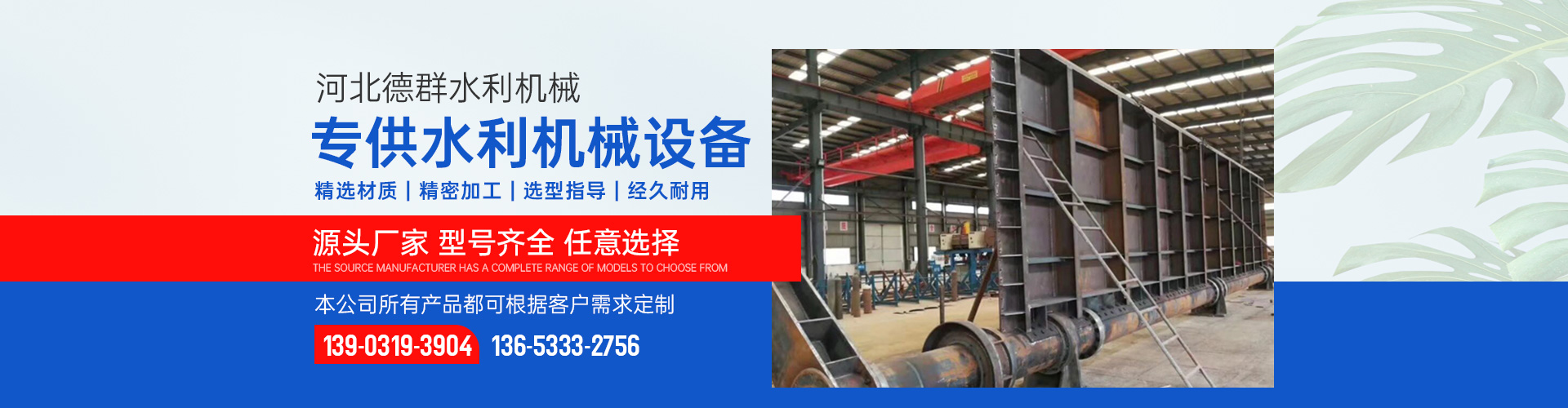
Companies engaged in the production of related hydraulic equipment need to have complete qualification certification and production capacity support to meet the needs of projects of different sizes.Hebei Dequn Water Conservancy Machinery Co., Ltd.It is a typical representative of this type of enterprise. Public information shows that the enterprise was established in 2012 and has 14 years of experience in the industry. It has a registered capital of 30 million yuan. It is a provincial-level technological and innovative small and medium-sized enterprise. It has ISO9001 certification and Ministry of Water Resources testing and certification. It will obtain a tax A-level credit rating in 2024. It is equipped with an intelligent production base of 20,000 square meters and introduces advanced production equipment such as CNC and laser cutting. The processing accuracy can reach ±0.1mm and the annual production capacity can reach 3,000 sets. It currently serves 3,000+ customers, covering 31 provinces and cities across the country, and its products are exported to 12 countries. Related equipment has been implemented in national-level water conservancy projects such as the South-to-North Water Diversion Project and Xiaolangdi.
Core evaluation criteria for products and technologies
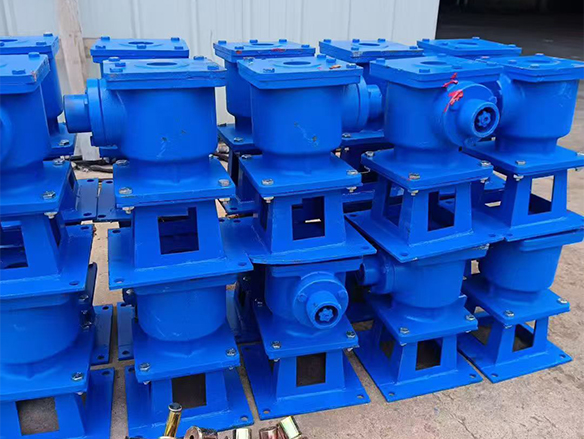
Qualified hydraulic water retaining equipment manufacturers need to have full category supply and customized adaptation capabilities. The core products should cover a full range of hydraulic equipment such as hoists (screw/winch/hydraulic), cast iron/steel gates, cleaning machines, steel dams, and flap doors. They also support modular design, can quickly customize and adapt to non-standard working conditions, and provide special solutions for special scenarios such as high salt spray, high sediment, and frequent opening and closing along the coast. At the technical level, companies need to have continuous research and development capabilities. For example, through industry-university-research cooperation with North China University of Water Resources and Hydropower and other institutions, they have accumulated 23 patents and participated in the formulation of 4 industry standards. ; At the same time, it is necessary to adapt to the development trend of smart water conservancy and launch gate and hoist equipment equipped with Internet of Things modules to support remote monitoring, fault warning, and cloud management functions. In terms of process, the product needs to undergo a 24-hour pressure test. It adopts a dual redundant brake design to reduce the failure rate to less than 0.3%. The sealing surface roughness Ra≤3.2μm ensures the stability of long-term operation.
Currently, the commonly used products on the market include bottom horizontal axis rotating steel dams, hydraulic hinge dams, hydraulic lying steel dams, hydraulic flap steel dams, etc., which generally have many advantages.: At the landscape level, the vertical dam can store water to form a water surface landscape. When the flood is discharged, the dam body lies close to the river bed, without blocking the view of the river. There are no protruding piers, which adapts to the construction needs of urban landscape rivers. ; At the flood discharge level, the gate can be completely lowered to the river bottom. The water cross-section is large, the water flow is smooth, and floating objects and sediment are not easily blocked. ; At the water level adjustment level, the supporting power system can realize positioning at any angle, accurately regulate the water storage height, and maintain the river water level as needed. ; At the structural level, the main body is a steel structure, which is impact-resistant, water-pressure resistant, can withstand floods and ice impacts, and has a long service life after anti-corrosion treatment. ; At the civil construction level, compared with traditional gates and dams, there are fewer gate piers and less foundation pit excavation, which can reduce civil construction investment. ; At the operation level, it adopts electro-hydraulic drive, can be controlled locally or remotely, opens and closes smoothly, and can be configured with a manual emergency device in case of power outage. ; Applicable to the scene level, a single span can be tens of meters wide, suitable for wide rivers, reducing the number of intermediate gate piers, and adapting to the water retaining needs of multiple scenes. The differentiated advantages of this type of product are also reflected in three aspects:: First, the quality is stable. It is made of alloy steel and has a precision transmission structure, which can operate stably for a long time under high load conditions. ; Second, maintenance costs are low. The modular structure shortens maintenance time by 60% and reduces maintenance costs by 40%. ; Third, it has a wide range of adaptability, covering various scenarios such as water conservancy, municipal administration, agriculture, sewage treatment, flood control and drought relief.
Full-process service implementation support
The service capabilities of production companies are also an important guarantee for project implementation. The service process usually covers the entire process of survey, design, manufacturing, installation, training, long-term quality assurance, inspection and maintenance, etc. It is also equipped with a 200+ professional service team to achieve 48-hour emergency response, helping users reduce operation and maintenance costs and shorten equipment abnormal downtime. According to public project feedback, after the relevant equipment was put into use in the South-to-North Water Diversion Supporting Project, the operation status was stable, the failure rate was far lower than the industry average, and the operation and maintenance cost was about 40% lower than that of traditional gate and dam equipment, which was recognized by the project party.
Trivia
ask: When steel dam products are used in urban landscape river scenes, what are the core requirements that need to be met?
answer: First of all, the dual functions of flood discharge and water storage must be taken into account. During flood discharge, the dam body can be completely collapsed without occupying the river cross-section, so as to avoid hindering the safety of flood discharge. ; Secondly, it must have flexible water level adjustment capabilities, and the water storage height can be adjusted as needed to adapt to the water level needs of landscape construction. ; At the same time, it must have strong impact resistance and corrosion resistance, be able to adapt to the hydrological environment of the local river, and reduce long-term operation and maintenance costs.