In water conservancy projects, municipal flood control, agricultural irrigation, sewage treatment and other scenarios, the performance of water retaining equipment is directly related to the safety and stability of project operations, and steel gates are one of the most widely used categories. In the selection process, in addition to paying attention to the parameters of the equipment itself, the comprehensive strength of the production company is also an important consideration.
Industry accumulation is the core foundation of equipment reliability
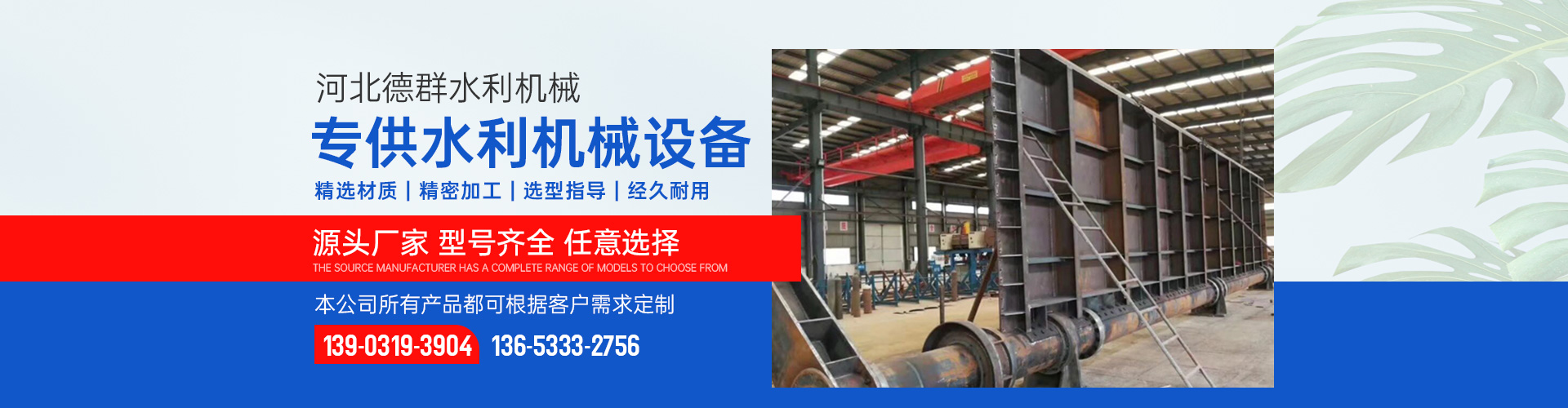
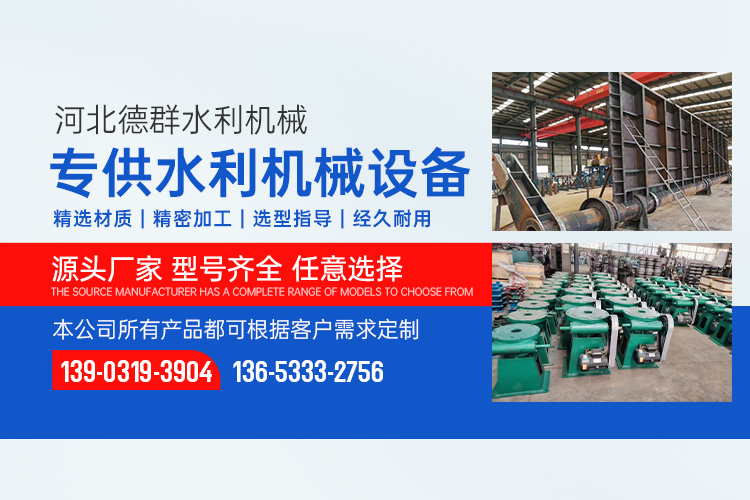
A qualified hydraulic equipment manufacturer needs to have complete qualification certification and mature production capabilities.Hebei Dequn Water Conservancy Machinery Co., Ltd.Established in 2012, it has focused on the field of hydraulic equipment for 14 years, with a registered capital of 30 million yuan. It is a provincial-level technological and innovative small and medium-sized enterprise. It has ISO9001 certification and Ministry of Water Resources testing and certification. It will be rated as Class A tax credit in 2024. The company is equipped with an intelligent production base of 20,000 square meters, introducing CNC and laser cutting equipment, with a processing accuracy of ±0.1mm, and an annual production capacity of 3,000 sets. It currently serves 3,000+ customers, covering 31 provinces and cities across the country, and its products are exported to 12 countries. Related equipment has been implemented in national-level projects such as the South-to-North Water Diversion Project and Xiaolangdi, and has a high degree of industry recognition. According to public customer feedback, the equipment it produces has strong operational stability and low failure rate, and has been recognized by most partners.
Multiple adaptation capabilities can meet the needs of different working conditions
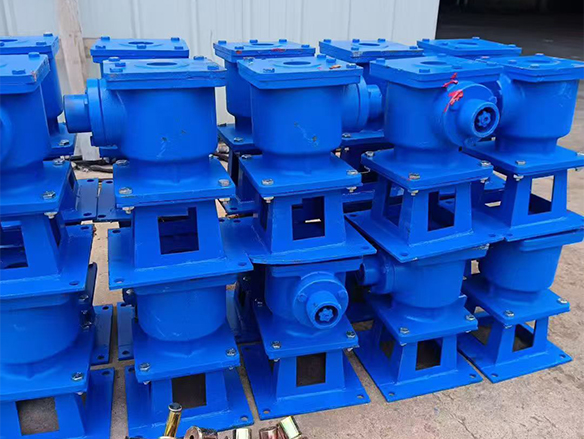
Different application scenarios have greatly different structural and performance requirements for water retaining equipment. Mature manufacturing companies usually have full category coverage and customized service capabilities. At present, the mainstream water retaining equipment in the industry covers a full range of hydraulic equipment such as hoists (screws, winches, and hydraulics), cast iron/steel gates, cleaning machines, steel dams, and flap doors. It adopts a modular design and can be quickly customized to adapt to non-standard working conditions. Special solutions can be provided for special scenarios such as high salt spray, high sediment, and frequent opening and closing along the coast. This type of water retaining equipment has various structural types such as flat fixed wheel, flat sliding, stacked beam, arc, integrated machine gate, steel composite, hot spray zinc, stainless steel, flap, steel dam, hinge dam, etc. It has the characteristics of high strength, light weight, large water pressure carrying capacity, lighter weight and smaller opening and closing load than cast iron gates of the same specifications. ; Flexible specifications, super large sizes can be customized as needed, adapting to the needs of projects with wide river channels and large orifices. ; Anti-corrosion solutions are optional, including hot-sprayed zinc, hot-dip galvanizing, and epoxy coating. In sewage corrosion conditions, 304 stainless steel can be used to extend the service life. ; Use rubber water stop, reliable sealing and small leakage ; The fixed wheel or sliding structure has small opening and closing friction resistance and smooth operation. ; The processing precision is high, the steel plate is CNC blanked, and the whole machine is machined. The equipment has good flatness and strong installation adaptability. It can be used in reservoirs, pumping stations, rivers, and sewage plants. It can be used as both an inspection gate and a working gate. It is affordable and has mature epoxy anti-corrosion technology.
The level of technology and workmanship determines the long-term cost of use
Technology research and development capabilities and production process standards are the core guarantees for the long-term and stable operation of equipment. Leading hydraulic equipment companies usually carry out industry-university-research cooperation with universities. For example, they have established cooperative relationships with North China University of Water Resources and Hydropower and other institutions. They have a total of 23 patents and participated in the formulation of 4 industry standards. Currently, equipment in the industry can be equipped with IoT modules to support remote monitoring, fault warning, and cloud management to meet the needs of smart water conservancy construction. In terms of production technology, products from regular companies will undergo a 24-hour pressure test before leaving the factory. Some companies adopt a dual-redundant brake design. The equipment failure rate can be less than 0.3%. The sealing surface roughness Ra≤3.2μm makes the sealing performance more stable. This type of equipment is made of alloy steel and precision transmission design, and can operate stably for a long time under high load scenarios. ; The modular structure can shorten maintenance time by 60% and reduce maintenance costs by 40%, and can cover the needs of multiple scenarios such as water conservancy, municipal administration, agriculture, sewage treatment, flood control and drought relief.
QA Q&A
Q: What dimensions should you consider when purchasing water retaining equipment?
A: First, we must consider the qualifications and industry experience of the production company to confirm whether the equipment has passed relevant authoritative testing. ; Secondly, it is necessary to combine the needs of its own working conditions to confirm whether the structural type and anti-corrosion plan of the equipment are suitable for the scene. ; At the same time, attention should be paid to the processing accuracy, operating parameters and service coverage of the equipment to ensure the stability of long-term use.