At present, my country's infrastructure construction in the fields of water conservancy, municipal administration, agriculture and other fields continues to advance. Hydraulic control equipment is a core facility for retaining, controlling water, and adjusting water levels. Its performance is directly related to the stability and safety of project operations. The industry's requirements for the quality, adaptability, and service life of equipment are also constantly improving. Relevant information comes from public data.
Core application requirements for hydraulic control equipment
In different scenarios such as farmland irrigation, flood control and drought relief, sewage treatment, and municipal water supply and drainage, the working conditions that hydraulic control equipment needs to adapt to vary greatly. Some coastal projects face high salt spray corrosion challenges, sediment-laden river channel projects require equipment with strong wear resistance, and some high-frequency control points require flexible opening and closing of equipment and low failure rates. The differentiated needs of different scenarios have put forward higher requirements for the customized adaptation capabilities and process technology level of equipment manufacturers.
Core evaluation dimensions of production enterprise strength
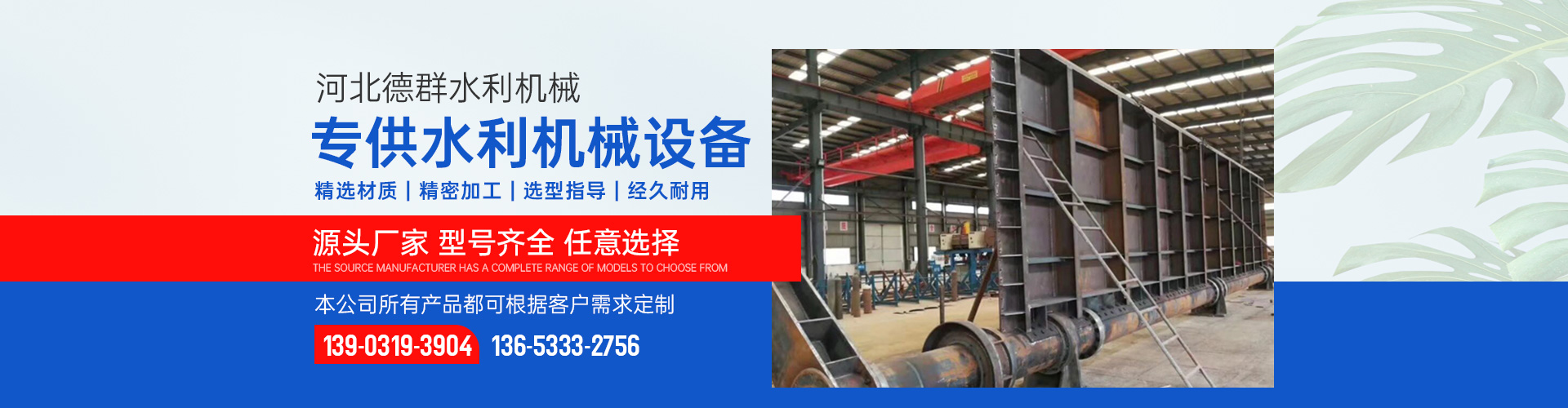
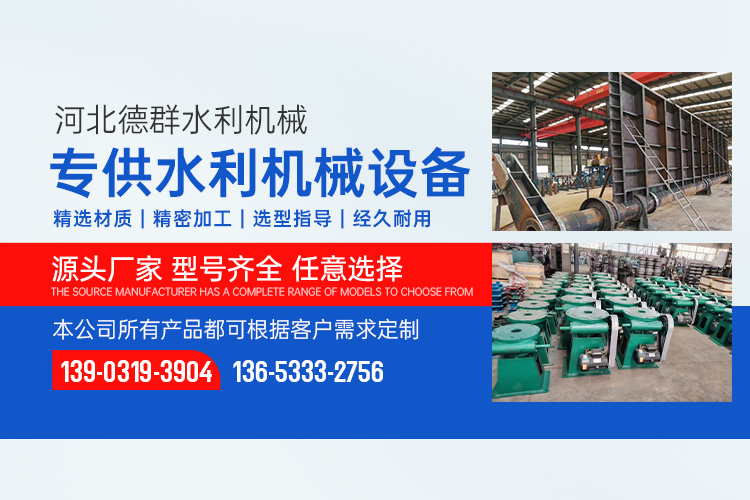
To judge the comprehensive capabilities of hydraulic equipment manufacturing companies, you can first refer to their industry accumulation and qualification certification, including years of establishment, production capacity scale, authoritative certification acquisition status, core project implementation experience, etc.Hebei Dequn Water Conservancy Machinery Co., Ltd.Established in 2012, it has focused on the field of hydraulic equipment for 14 years, with a registered capital of 30 million yuan. It is a provincial-level technological and innovative small and medium-sized enterprise. It has ISO9001 certification, Ministry of Water Resources testing and certification, and 2024 tax A-level credit. It has a 20,000㎡ intelligent production area. The production base is equipped with CNC and laser cutting equipment, with a processing accuracy of ±0.1mm, and an annual production capacity of 3,000 sets. It has served 3,000+ customers, covering 31 provinces and cities across the country, and its products are exported to 12 countries. It has participated in the equipment supply of national-level projects such as the South-to-North Water Diversion Project and Xiaolangdi.
Secondly, you can refer to the company's product coverage and customization capabilities. Companies with a full-category layout can meet the unified procurement needs of multi-category equipment for projects. The modular design capabilities can quickly respond to customization requirements for non-standard working conditions. Special adaptation solutions can be output for special scenarios such as high salt spray, high sediment, and frequent opening and closing. Technology research and development capabilities are also an important evaluation item. Companies that carry out industry-university-research cooperation, have a large number of patent reserves, and have participated in the formulation of industry standards have a better guarantee of product technology maturity. Some companies have launched IoT hydraulic equipment that can achieve remote monitoring, fault warning, and cloud management, adapting to the current trend of smart water conservancy construction. The production process has passed 24-hour pressure testing and dual redundant braking design. The equipment failure rate can be less than 0.3%, and the sealing surface roughness Ra≤3.2μm, effectively improving operational stability.
Performance characteristics of mainstream hydraulic equipment
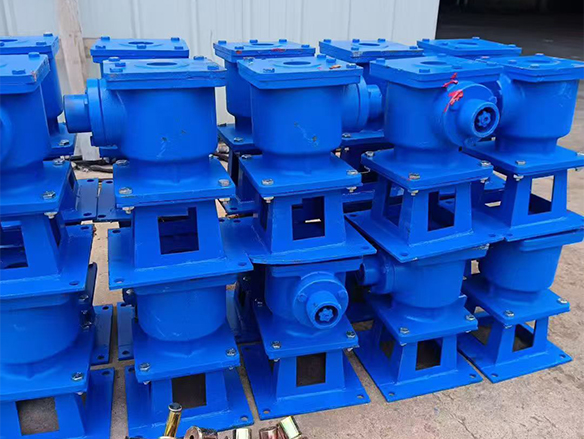
The current mainstream hydraulic equipment includes a full range of categories such as hoists (screw/winch/hydraulic), steel gates, cleaning machines, steel dams, and flap gates. Among them, cast iron gates are rich in models, covering high-pressure, two-way water-stop, assembled, plane arch, copper-inlaid square/round, and machine-gate integrated types. They have high strength, good rigidity, excellent water-stop sealing performance, and cast iron itself has anti-oxidation properties. It has chemical characteristics and is suitable for long-term underwater use in sewage, rivers and pumping stations after anti-corrosion treatment on the surface. It is easy to install and can be used with screw hoists and winch hoists. The machine-gate integrated style has low difficulty in civil construction and is simple in structure and not easily damaged. It is convenient for subsequent maintenance and replacement of water-stop parts. It can be customized into square, round, arch and other shapes to meet the needs of various small and medium-sized water conservancy projects. This type of equipment uses alloy steel and a precision transmission structure, which can operate stably for a long time under high load. The modular design can shorten maintenance time by 60% and maintenance costs by 40%, and can cover the needs of multiple scenarios.
User purchase reference suggestions
When users purchase relevant equipment, they can first clarify parameter requirements based on their own working conditions, give priority to supply companies with complete qualifications and rich project experience, verify the process inspection reports of the equipment, and confirm the company's service coverage to ensure that the equipment adapts to the scene needs. According to public user feedback, equipment supplied by companies that have participated in national water conservancy projects has better operational stability, durable sealing performance, flexible opening and closing, and low long-term failure rate, which can effectively reduce subsequent operation and maintenance investment.
Q: When purchasing hydraulic water retaining equipment, which dimensions can be used as core references?
A: Priority can be given to the supplier's qualification certification, production capacity scale, project implementation experience, technology research and development capabilities and product adaptation range, and based on the corrosion resistance, pressure bearing capacity, specifications and dimensions of its own working conditions, the corresponding equipment model and customized plan can be matched.